Ambush Sportfishing emblem
Fishing in Kona

What we catch.
When we catch it.

The species, the seasons, and the techniques aboard Ambush Sportfishing — a 40-foot Gamefisherman out of Honokōhau Harbor, Kailua-Kona.

0 Years on this water
0hr Full-day charter
0min From harbor to big-game water
0ft Gamefisherman, slip 16
The Kona Drop-Off

Big-game water, ten minutes from the harbor.

Most sportfishing destinations require a long run offshore before the bite even starts. Kona doesn't.

The seafloor falls to over 100 fathoms within ten minutes of Honokōhau Harbor. By the time you've finished your coffee, we're trolling true big-game water — the kind where blue marlin, yellowfin tuna, and ono live.

The Big Island also blocks the trade winds on the Kona side. The seas stay calm most days while the rest of the Pacific is chopped up. That's why Kona produces more IGFA Pacific blue marlin records than any other sportfishing destination in the world — and why we run a nine-hour day. Every hour we're out is fishing time.

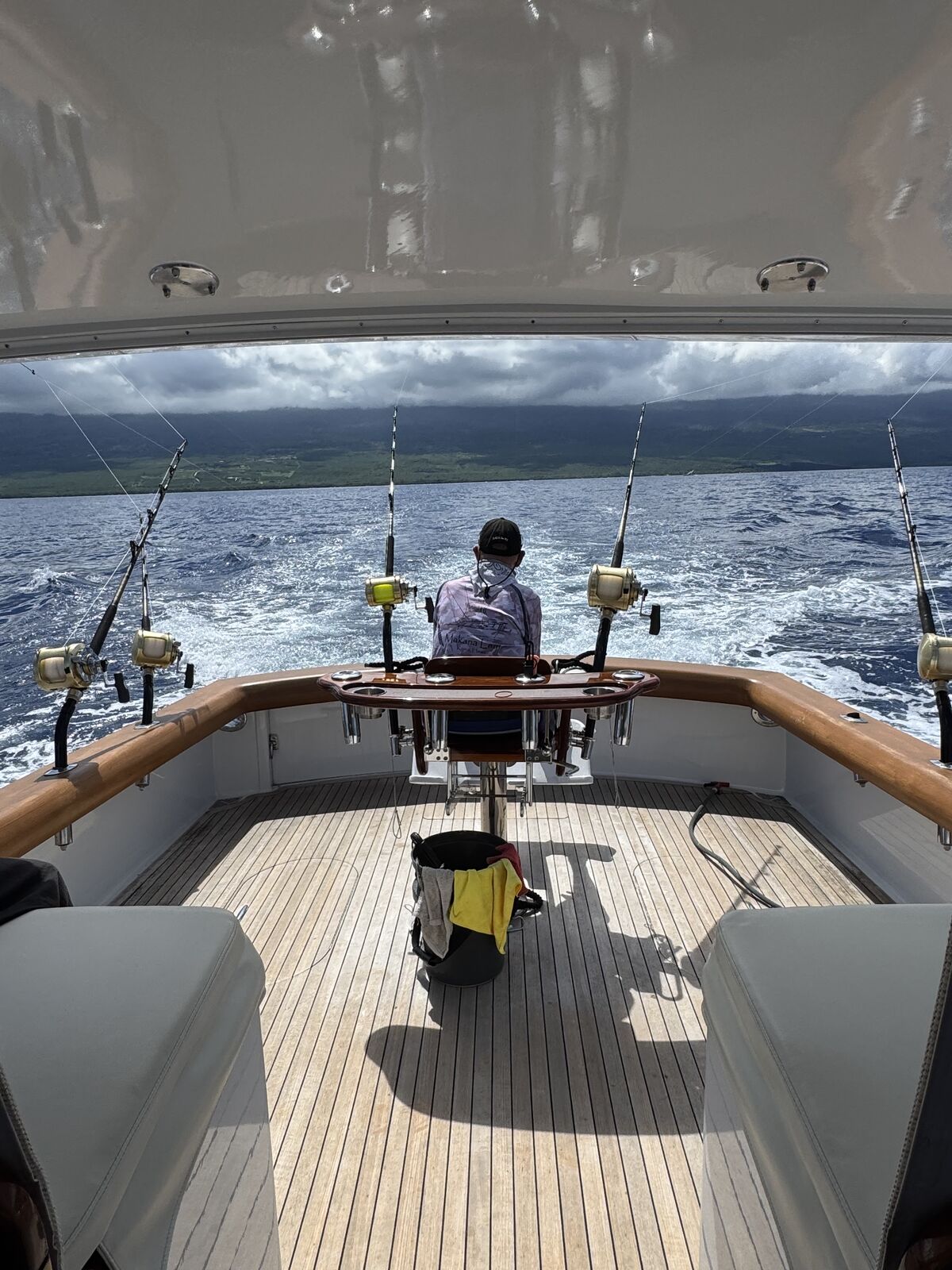
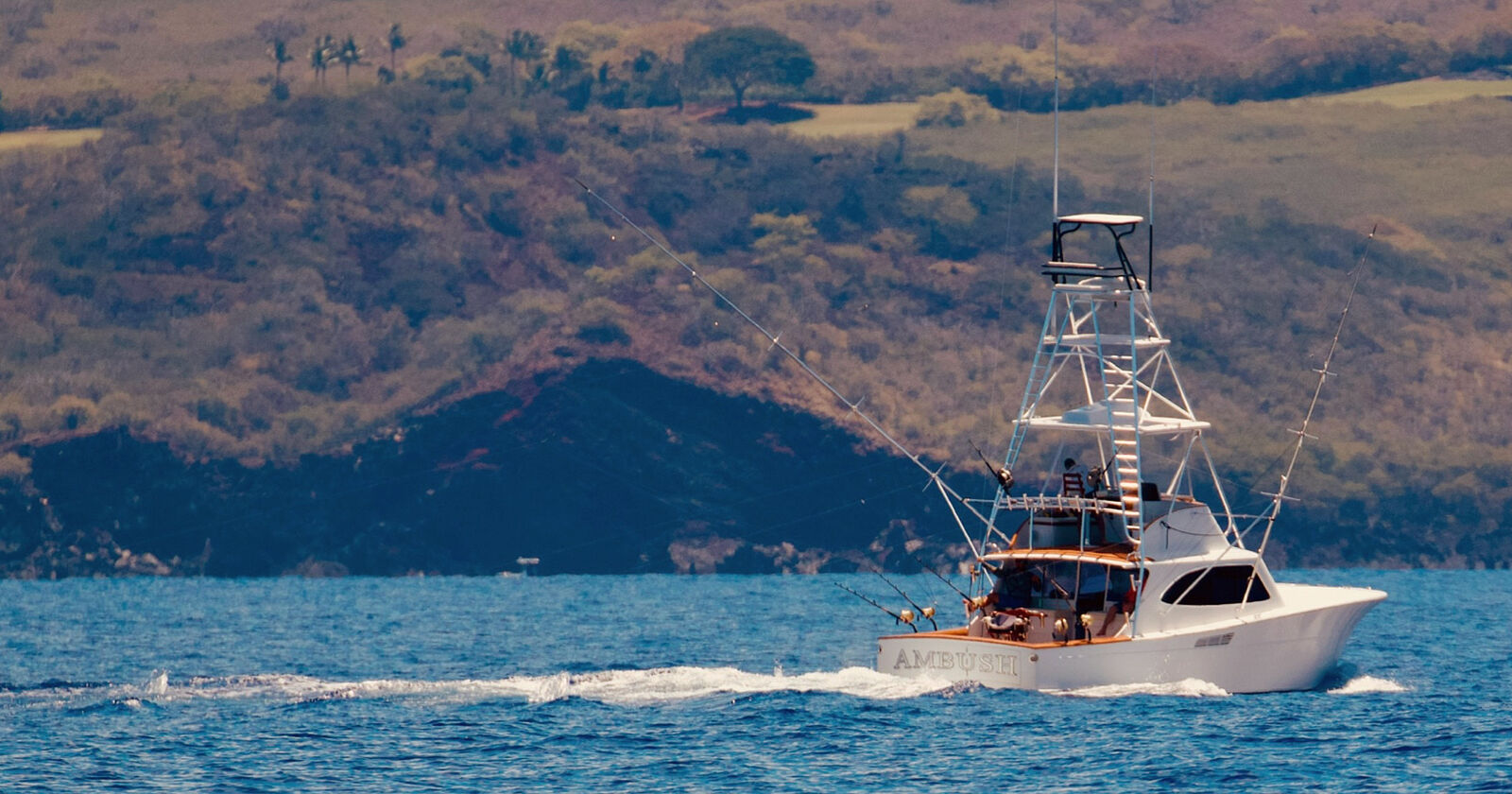
Ambush — a 40-foot Gamefisherman — running off the Kona drop-off 10 min from harbor 100+ fathoms beneath the hull
Ambush — running the drop-off. Honokōhau Harbor · Kailua-Kona
The Kona Record
0 lb

The Pacific blue marlin world record was landed off Kailua-Kona in 1970. Kona still produces more granders than any port on earth.

A "grander" is a billfish over 1,000 pounds. Kona averages two to three a year — water this productive simply doesn't exist anywhere else.

The Kona Fishing Calendar

What's biting, by month.

Kona fishes year-round. Some species peak in summer, some in winter, some are on the chew the whole year. Here's what to expect when you book.

Species
Jan
Feb
Mar
Apr
May
Jun
Jul
Aug
Sep
Oct
Nov
Dec
Pacific Blue Marlin aʻu
Yellowfin Tuna ahi
Mahi Mahi dorado
Ono wahoo
Striped Marlin aʻu
Shortbill Spearfish aʻu lepe
Bigeye Tuna ahi poʻo nui
Skipjack Tuna aku
Peak — on the chew Good — running Possible — quieter month
When should I come?
JanFeb MarApr May JunJul AugSep Oct NovDec

Pacific blue marlin run hardest June through September. The granders — fish over 1,000 lb — tend to show March through May. Winter visitors should book Jan–Mar to chase striped marlin instead, which we don't see in summer.

JanFebMar AprMay JunJul AugSep Oct NovDec

Yellowfin (ahi) chew hardest June through September — that's when the big schools push under the porpoise pods. The single biggest fish of the year often come in November and December. Bigeye tuna peak through the winter on the same trips.

JanFeb MarApr May JunJul AugSep OctNov Dec

March through May is the variety window — striped marlin, spearfish, the first blue marlin, mahi, and ono are all in play. October and November are the other sweet spot: blues are still around, bigeye are showing, ahi are big, and mahi return.

The Species

What you might find on the gaff.

Every species we target aboard Ambush — what it looks like, when it peaks, average size off Kona, and how we fish for it.

Pacific Blue Marlin

Pacific Blue Marlin

Makaira nigricans · aʻu

Peak seasonJun – Sepgranders Mar–May
Average size200–400 lbgranders > 1,000

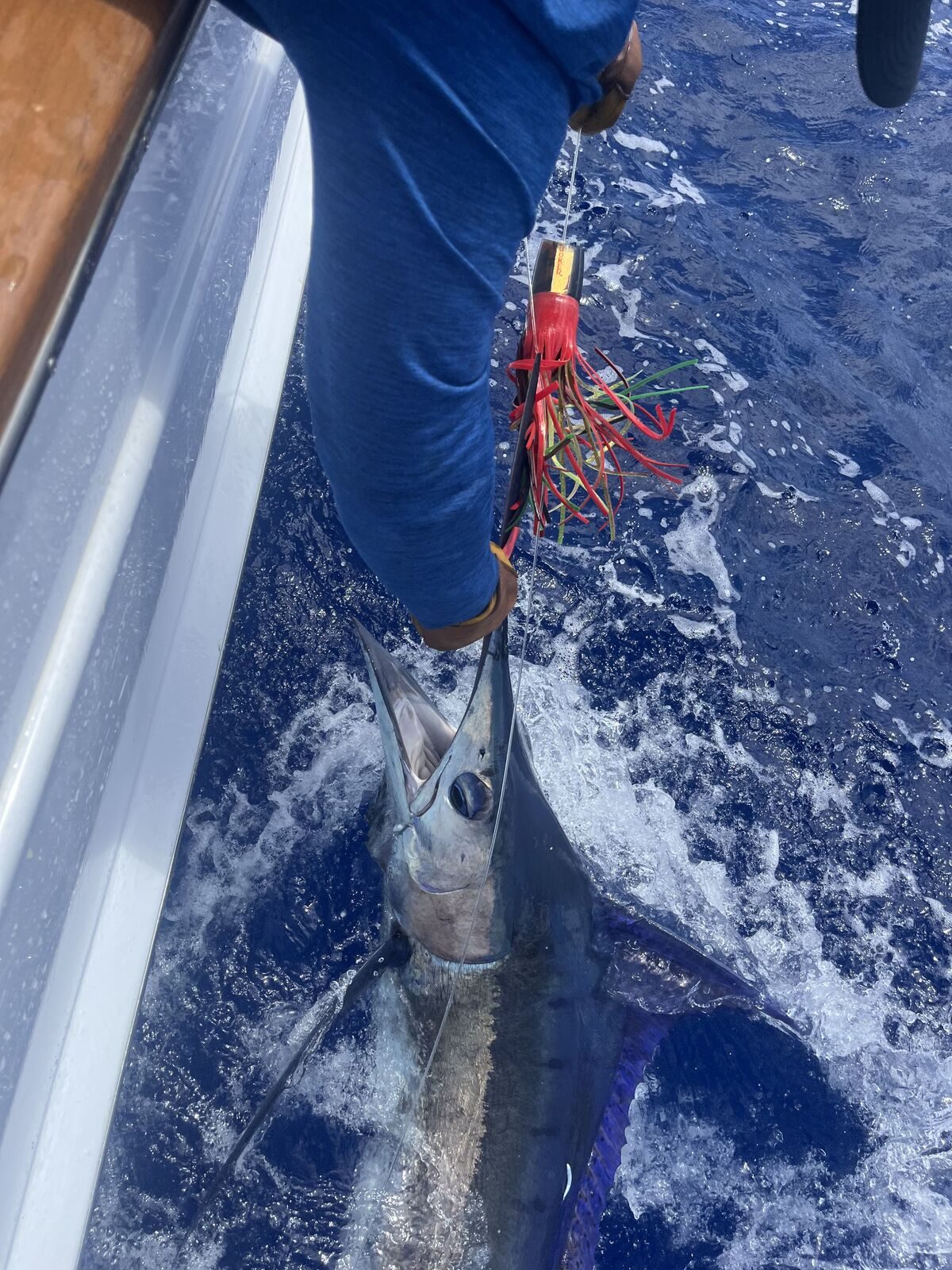
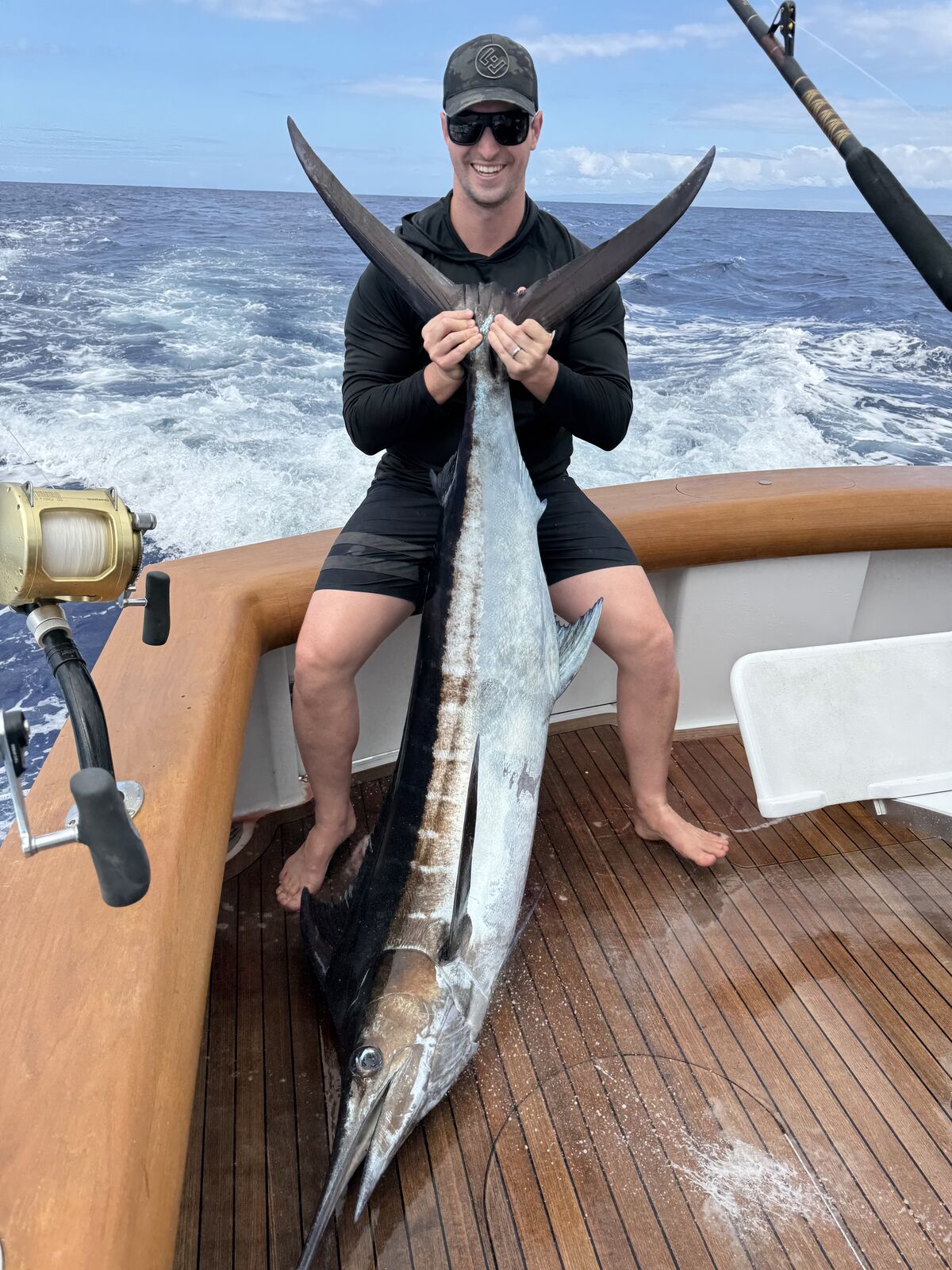
The headline fish of Kona. Kona produces more IGFA Pacific blue marlin records than any other sport-fishing destination in the world — the IGFA world record (1,376 lb) was caught here in 1982.

Kona averages 2–3 granders a year. Most blue marlin you'll see weigh 200 to 400 pounds. Females grow far larger than males — the biggest top 2,000 lb. Aboard Ambush we troll a heavy spread; live aku gets dropped back when the bite calls for it.

Yellowfin Tuna

Yellowfin Tuna

Thunnus albacares · ahi

Peak seasonJun – Sepbiggest Nov–Dec
Average size~130 lbover 300 lb common

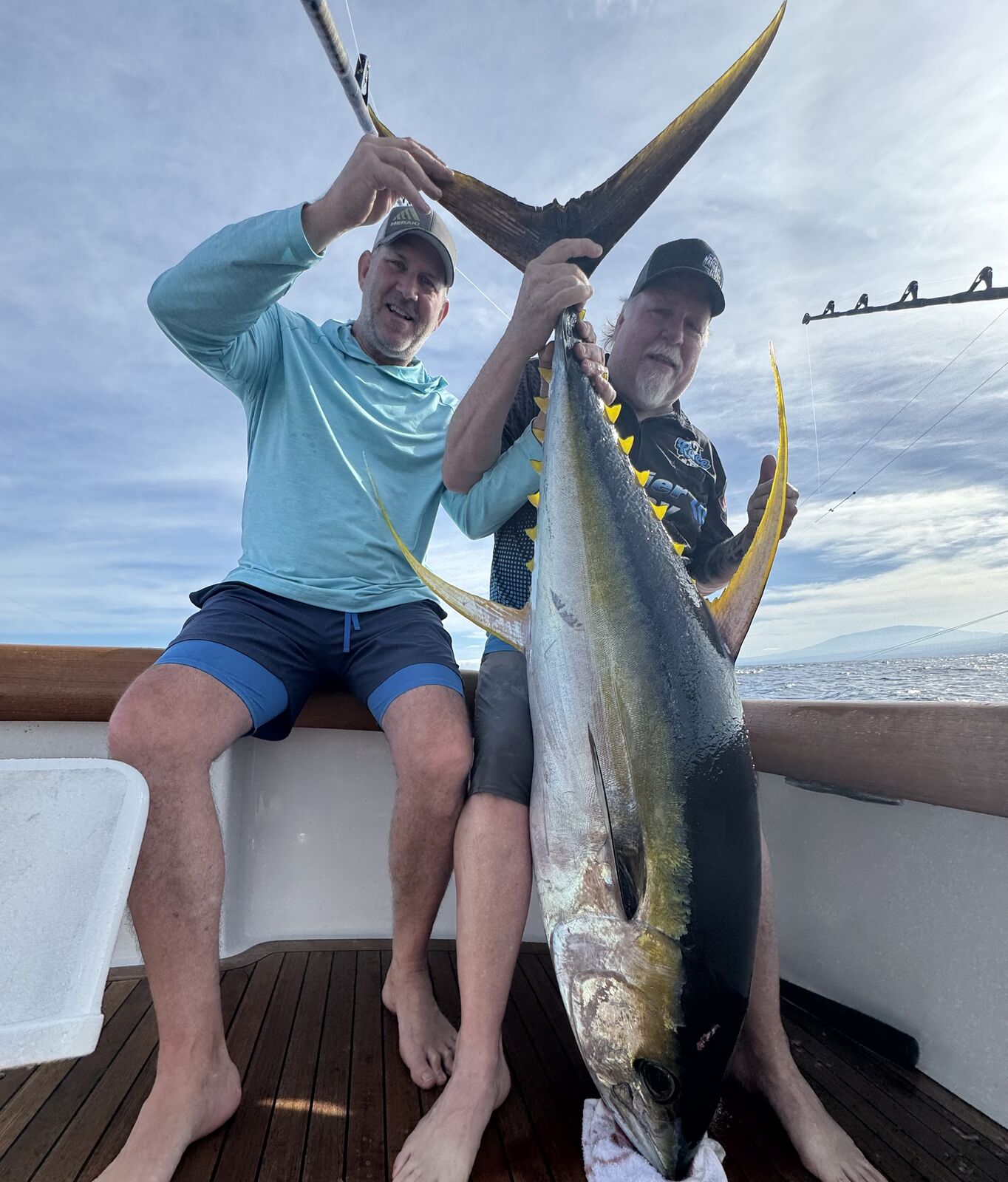
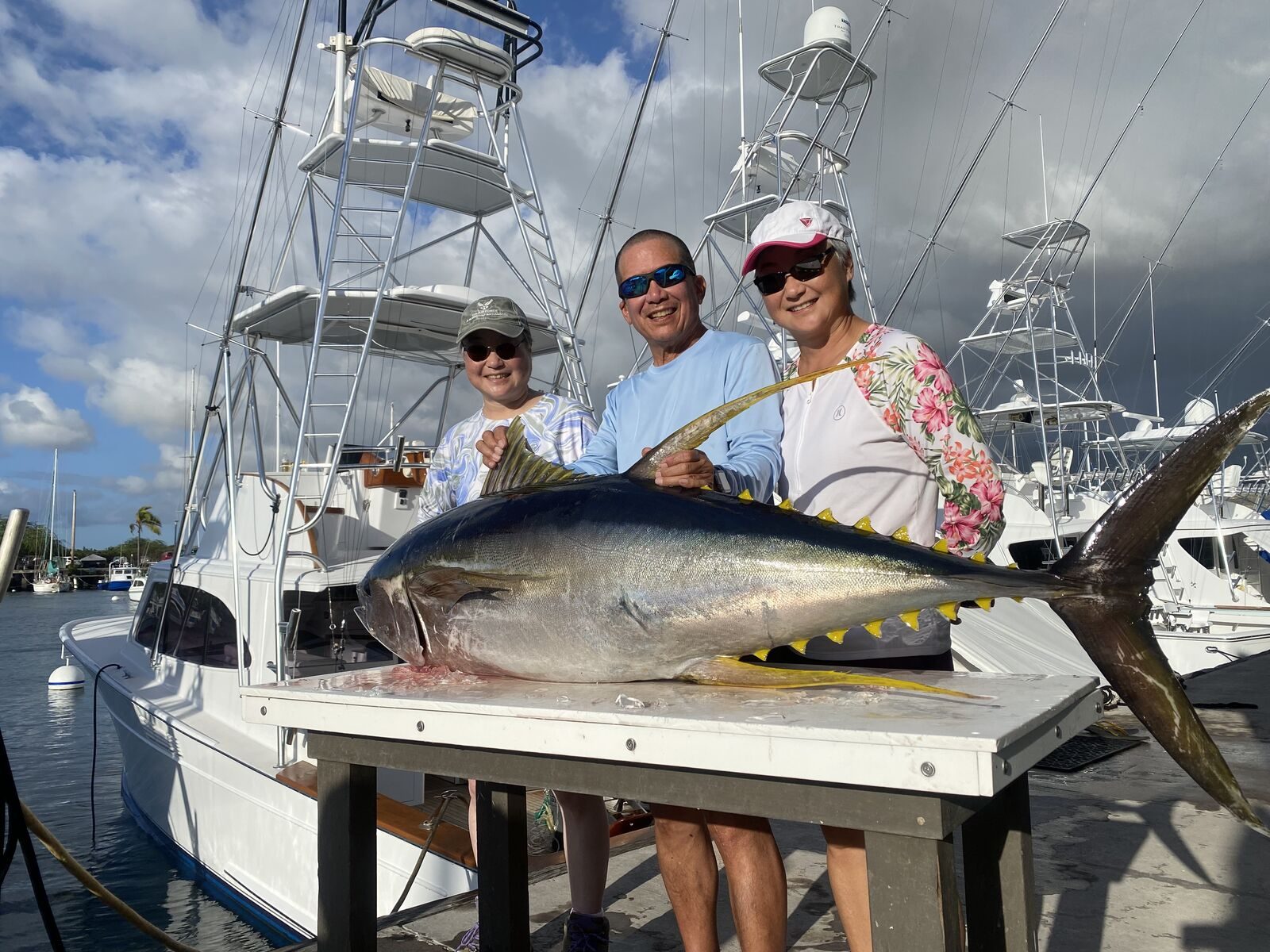
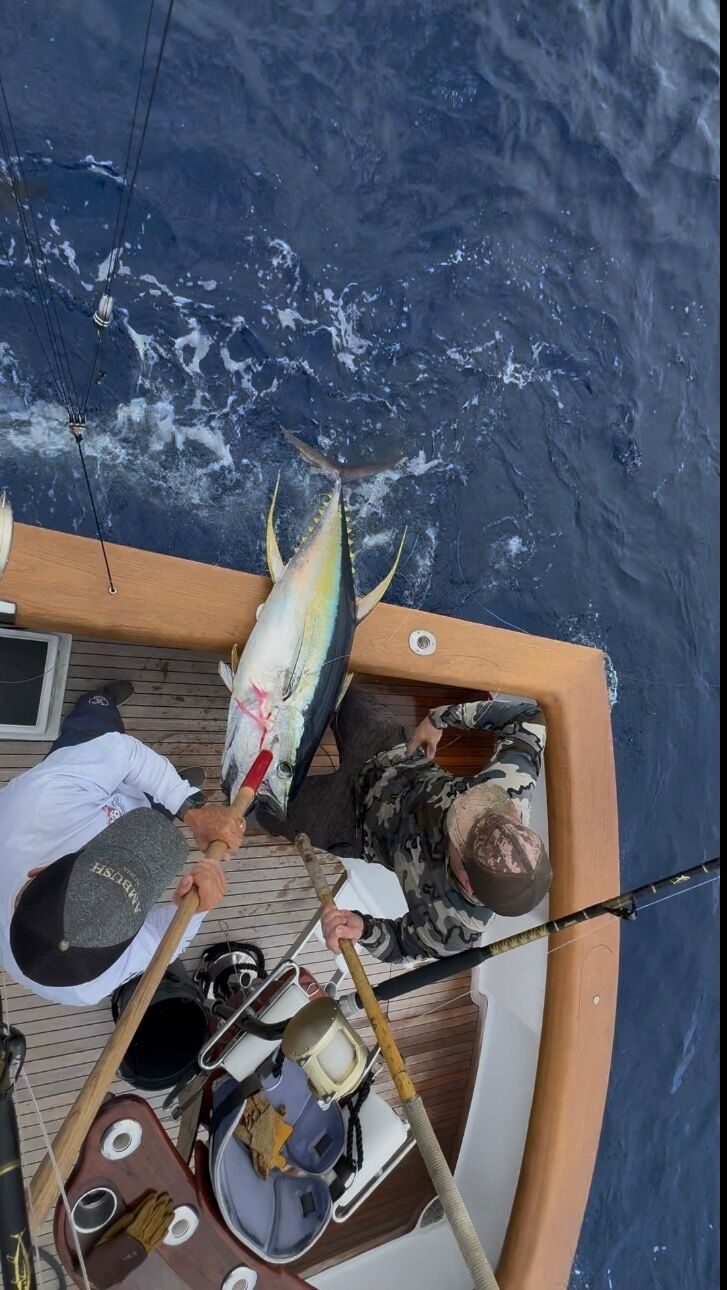
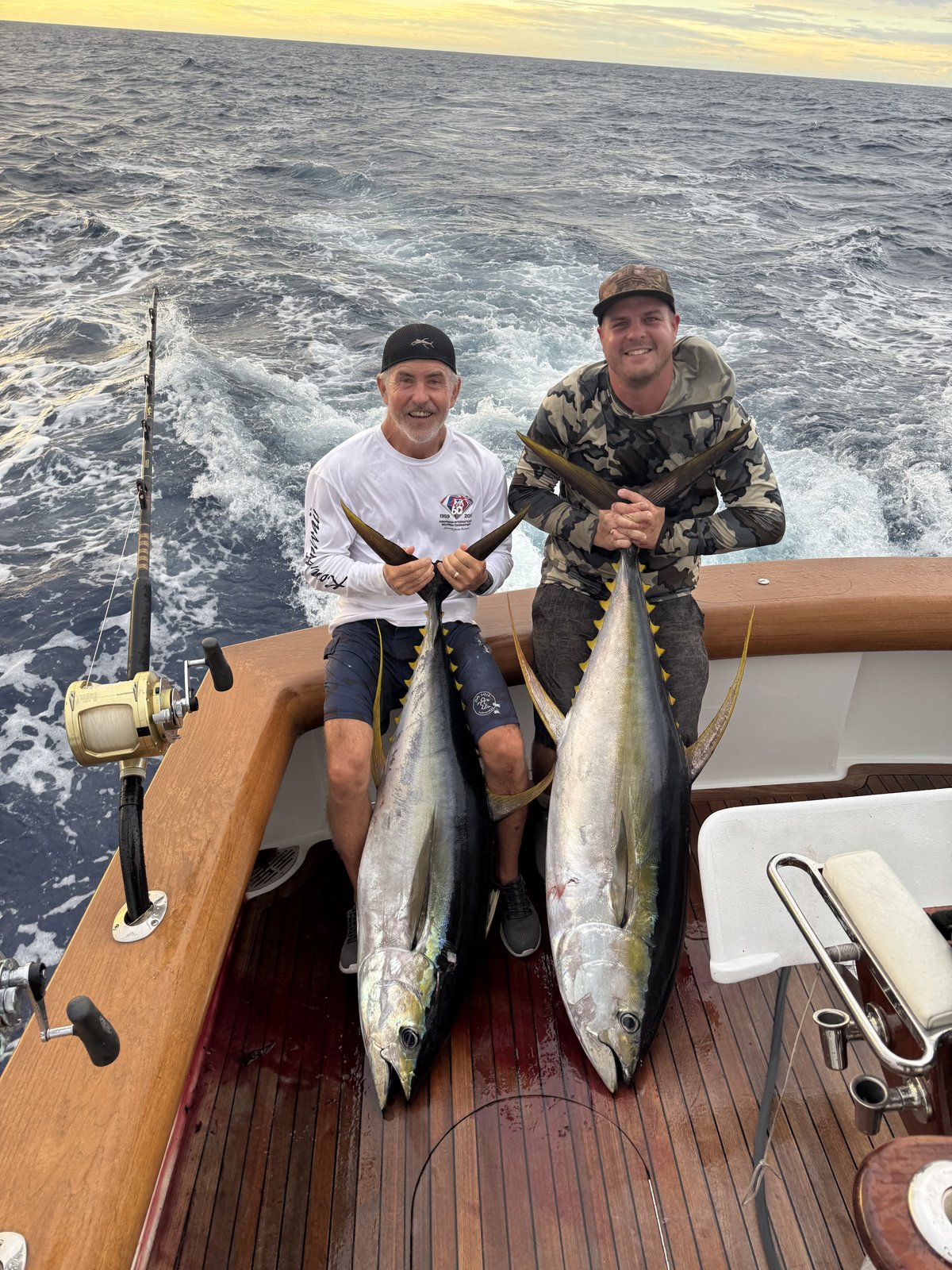
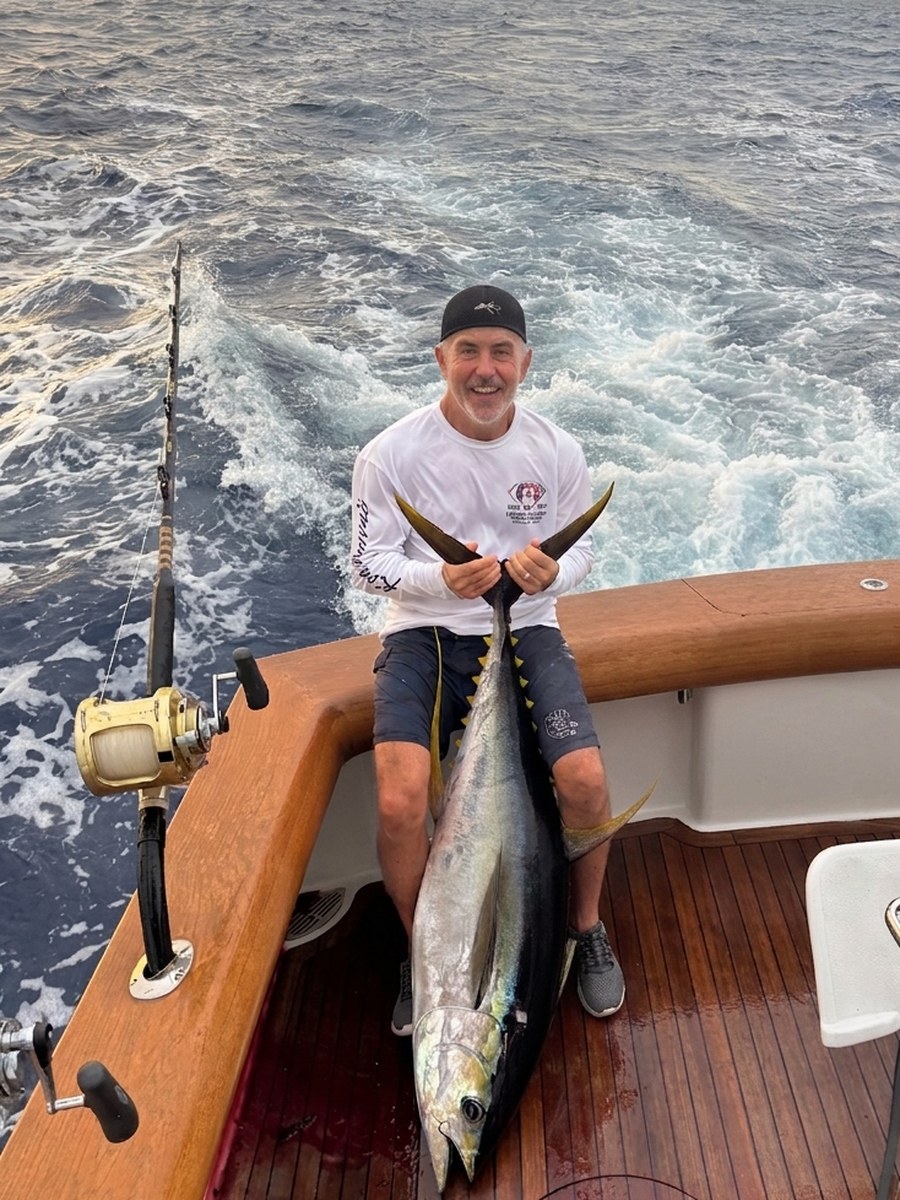
Kona's other heavyweight. Hawai‘i state record: 325 lb. Bursts to 50 mph. Big runs reach Kona by Father's Day and stay through summer; some of the biggest fish of the year come in November and December.

We troll the heavy lure spread for them and switch to live bait when the porpoises show up — ahi run under the spinner pods, and that's how we find the biggest.

Mahi Mahi

Mahi Mahi

Coryphaena hippurus · dorado

Peak seasonNov – Maralso Sep–Oct
Average size15–40 lbup to 60+ lb

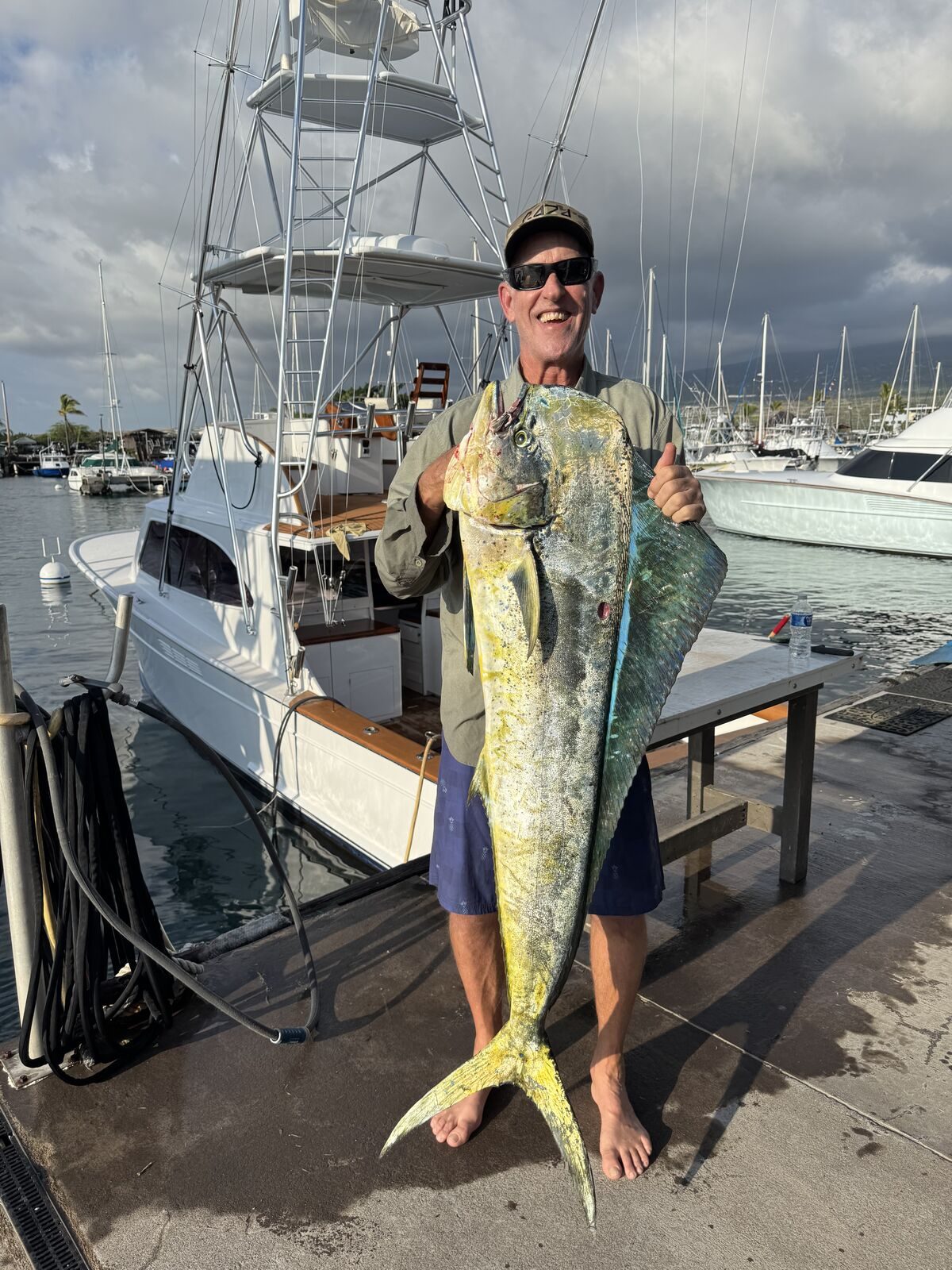
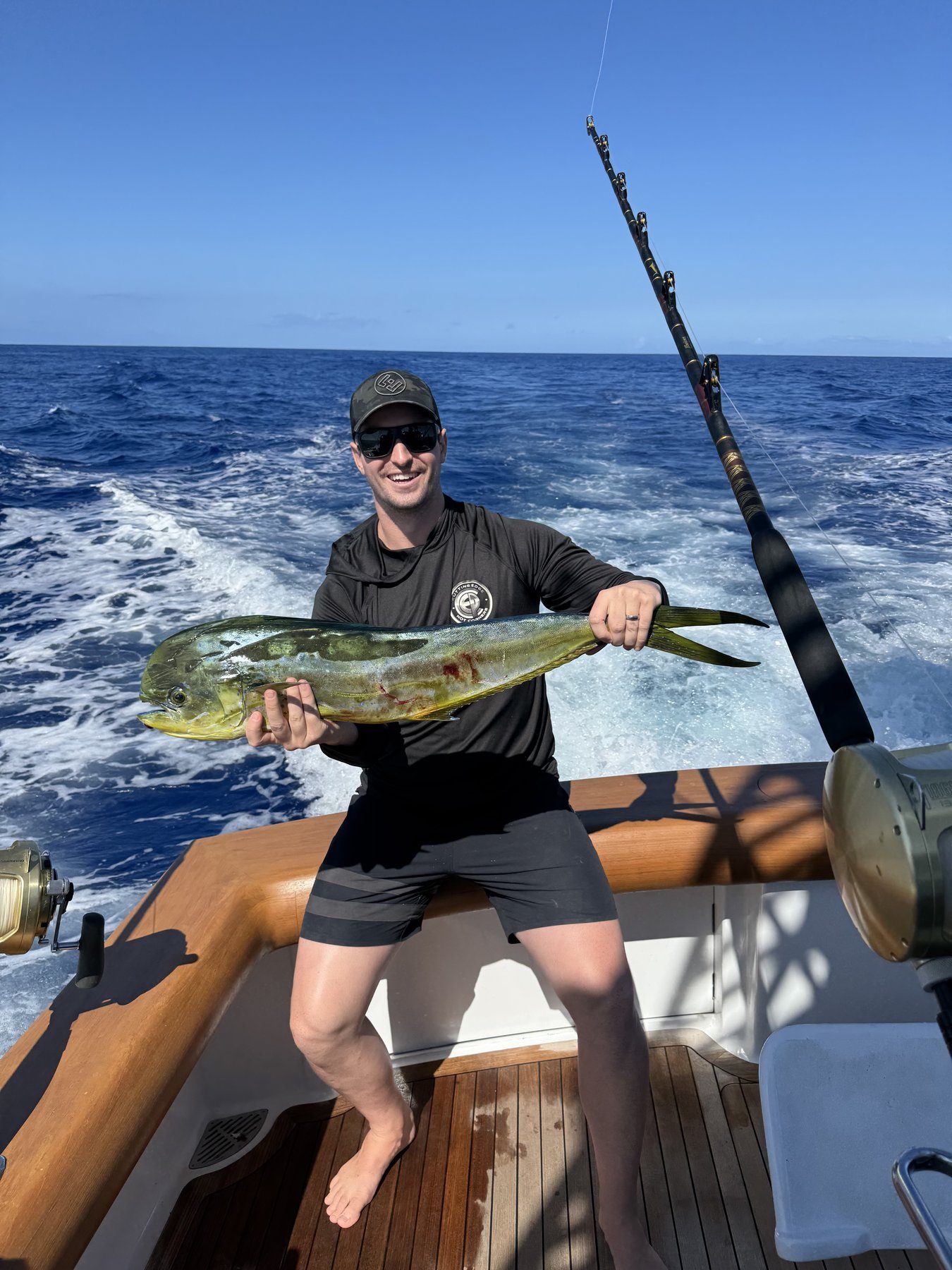
The acrobat. Iridescent blue-and-gold, leaps when hooked, and dies dramatically — the colors fade the moment it comes over the rail. Best eating fish on the boat.

Mahi run thickest in the cooler months in Kona — opposite of the US East Coast. They hang under floating debris and frigate birds. We troll the long-rigger lures and watch the sky as much as the spread.

Ono

Ono

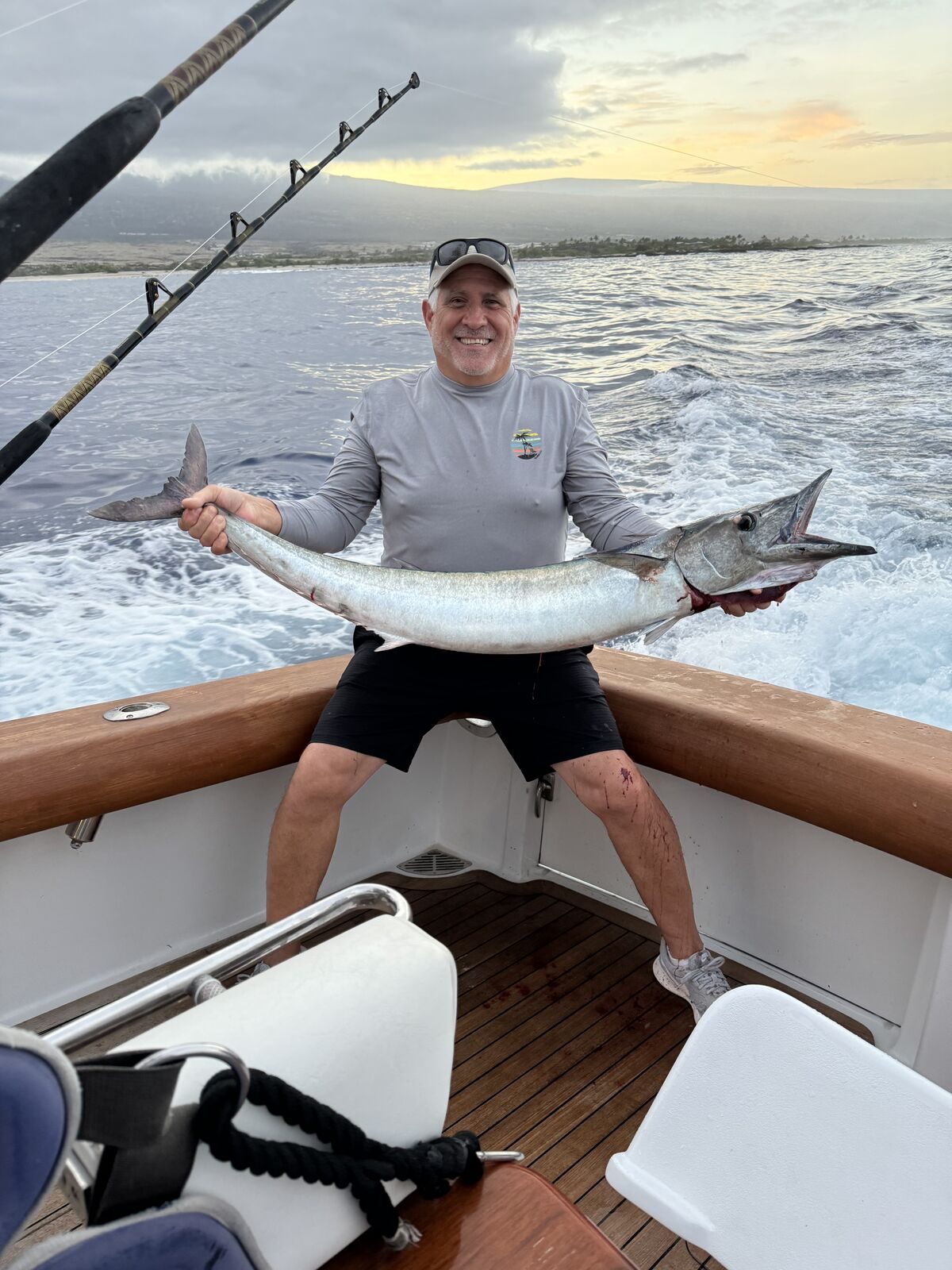
Acanthocybium solandri · wahoo

Peak seasonMay – Sepfull moon runs
Average size25–60 lbfastest fish here

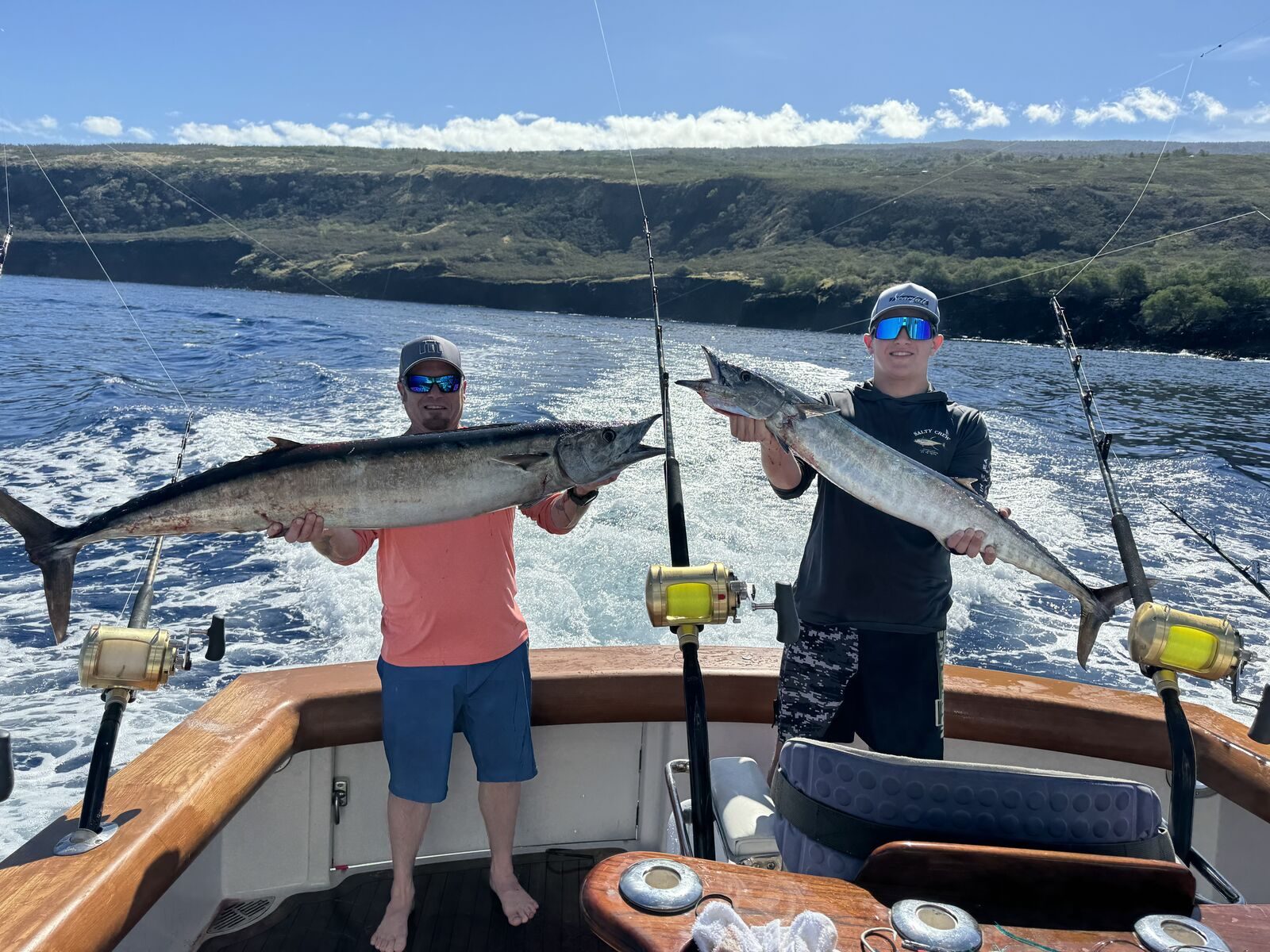
The bullet. Ono hit a trolled lure at over 45 mph and strip line so fast the reel screams. Long, lean, vertically striped, with a mouthful of razor teeth — we wire-leader everything when ono are around.

The peak runs are timed to the full moons from May through September. We troll high-speed Yo-Zuris and bullet-head lures when we're targeting them.

Striped Marlin

Striped Marlin

Kajikia audax · aʻu

Peak seasonJan – Marwinter species
Average size100–250 lbover 300 possible

The winter marlin. Smaller and faster than blues, with vertical cobalt stripes that flash electric when they light up on a lure. They jump more — sometimes a dozen leaps in one fight.

Peak through January to March, while the blues are quieter. Same trolling spread, lighter tackle. A striped marlin on light line is one of the best fights in sportfishing.

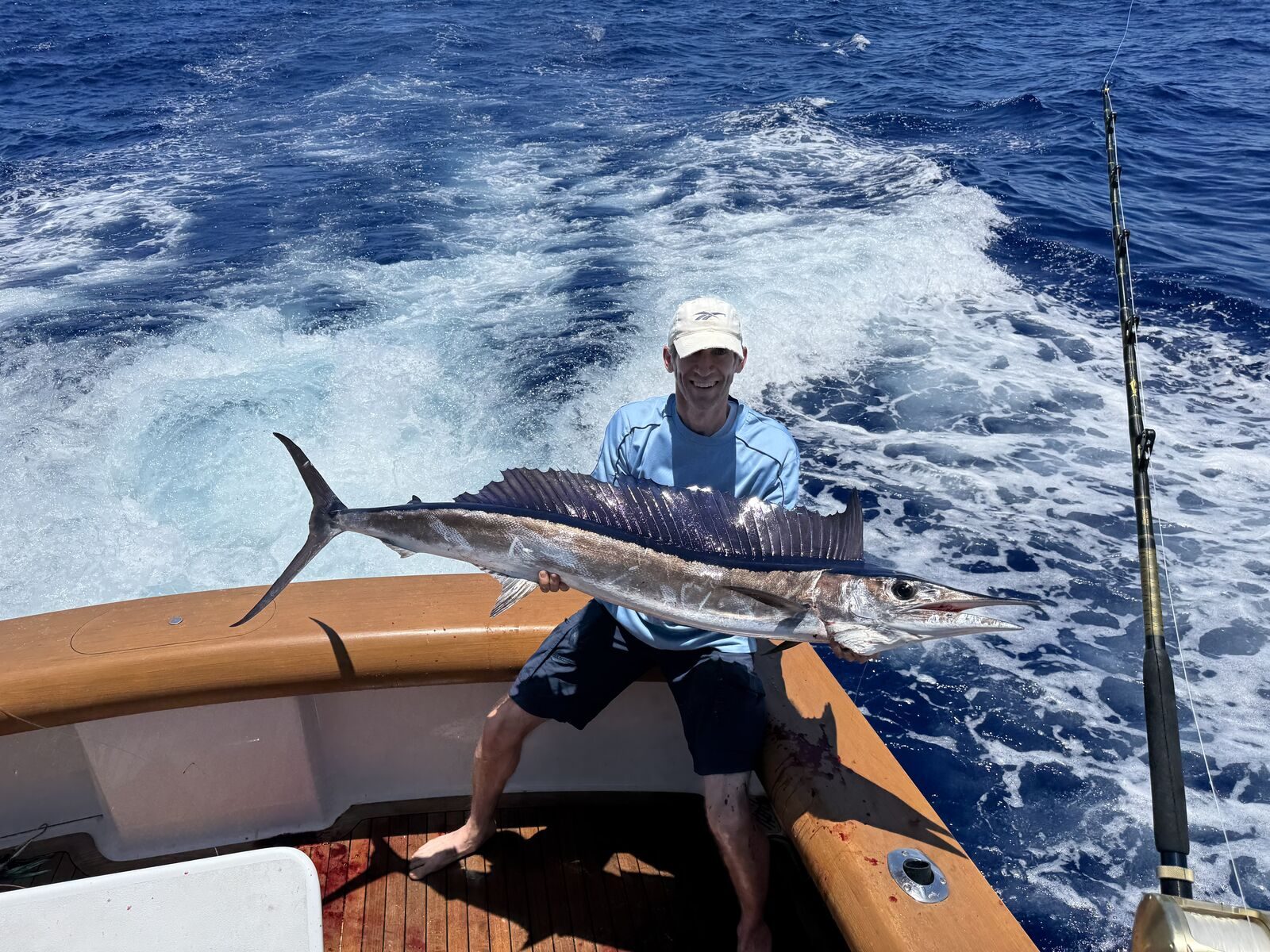
Shortbill Spearfish

Shortbill Spearfish

Tetrapturus angustirostris · aʻu lepe

Peak seasonJan – Mayspring is best
Average size20–60 lbbillfish on light tackle

The smallest billfish in the spread — but a true billfish. Short, blunt bill, oversized sail-like dorsal fin. Spring is their season; they show up January through May on the same troll lines as blue marlin.

Aboard Ambush, a spearfish on light tackle is one of the most fun fights of the year. They jump, they peel line, they're a perfect target for an angler who's never landed a billfish.

Bigeye Tuna

Bigeye Tuna

Thunnus obesus · ahi poʻo nui

Peak seasonOct – Febdeep, deep water
Average size80–200 lbdenser than ahi

The cold-water tuna. Named for its enormous eyes — built for seeing at depth, where they spend most of their time. Cousin of the yellowfin but heavier per inch and arguably the best sashimi-grade tuna on Earth.

Bigeye come up during fall and winter in Kona. We work the deep current edges and the FAD buoys when they're around. They fight differently than ahi — straight down, no surface runs.

Skipjack Tuna

Skipjack Tuna

Katsuwonus pelamis · aku

Peak seasonYear-roundbest Oct–Nov
Average size5–25 lbperfect live bait

The workhorse. Aku run year-round in Kona — they're the bait that big marlin chase, and they're the bait we use when we live-bait the spread for a grander.

Aku also fight hard on light tackle and run in big schools when you find them. Smoked aku is a Hawaiian classic. If you're new to ocean fishing, aku are the perfect first fish — fast, strong, and willing.

These are wild fish.

Every species on this page is what we target — not what we promise. Some days the bite is on and the cooler fills before lunch. Some days you work for one strike.

What we guarantee is the boat, the captain, the spread, and a full nine hours of fishing the right water. The ocean handles the rest.

Off the Boat

Real fish. Real days.

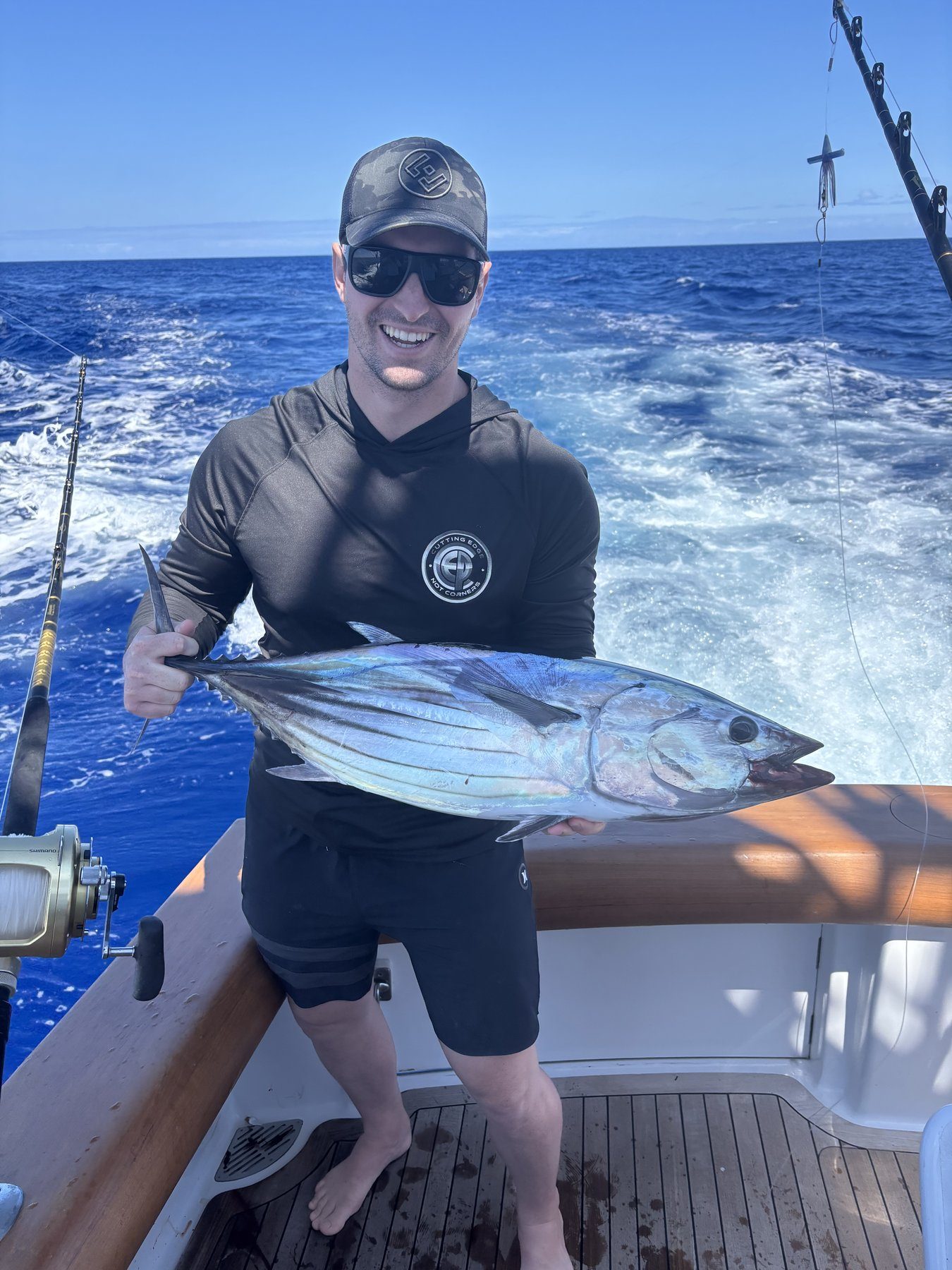
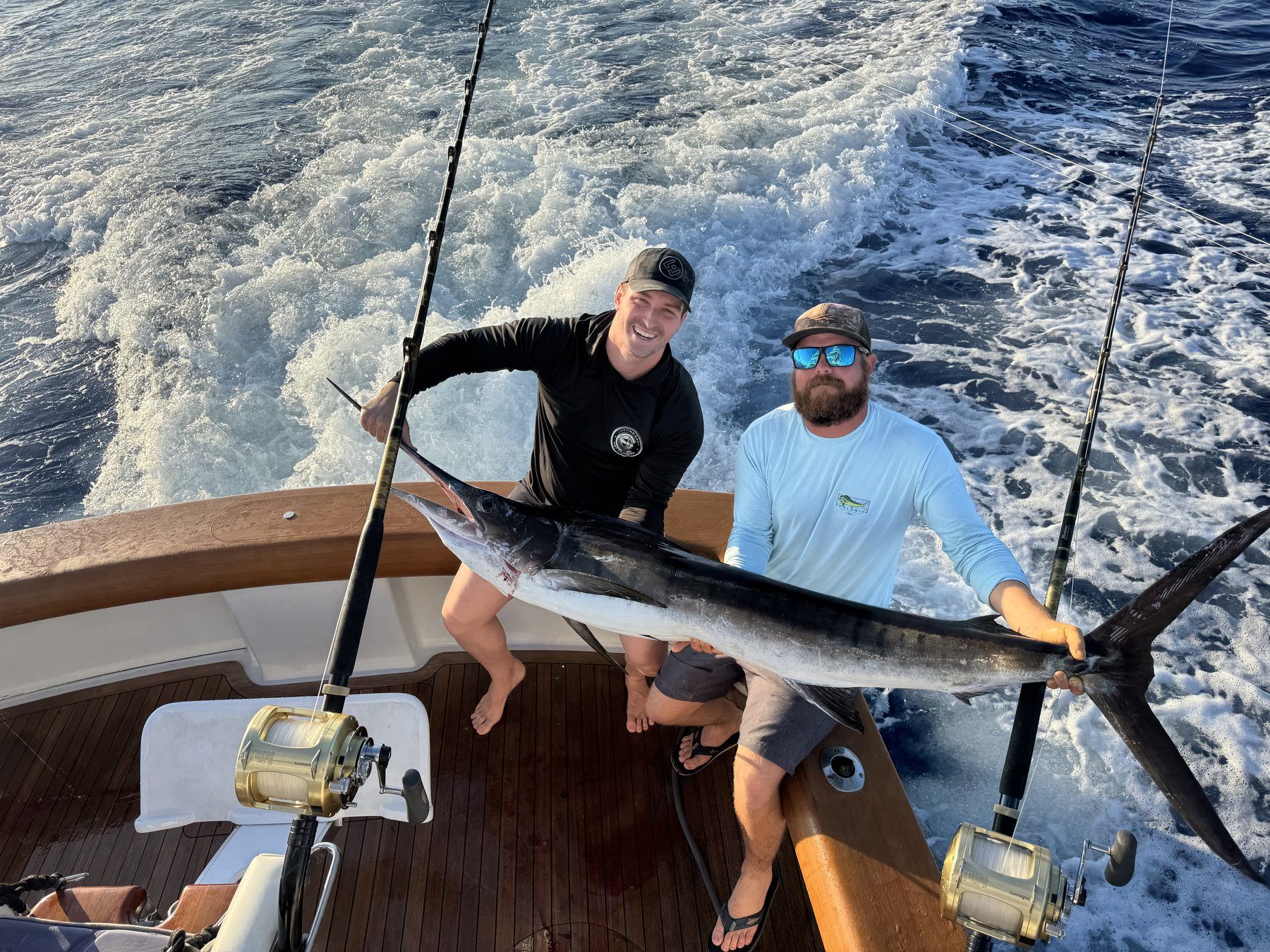
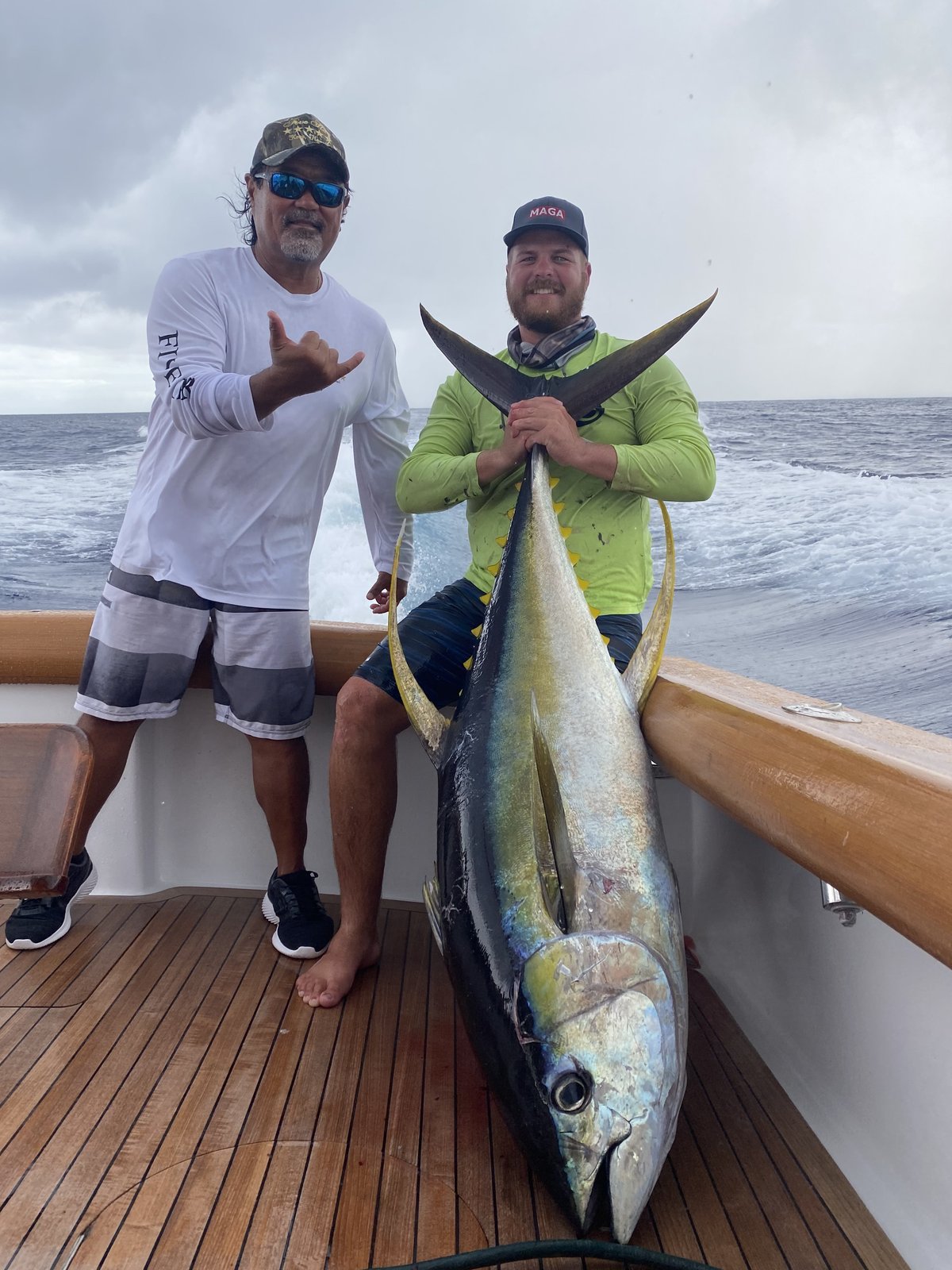
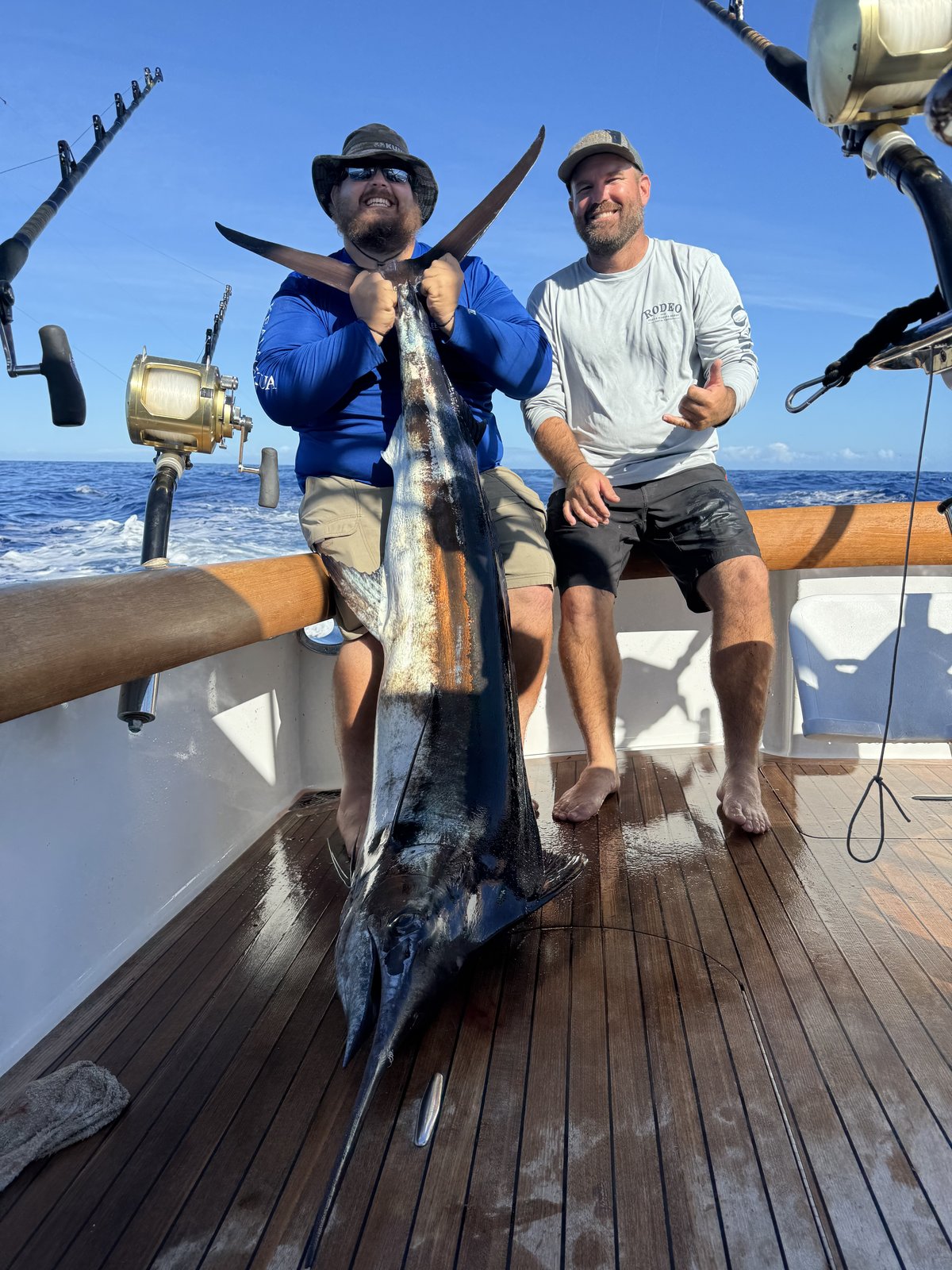
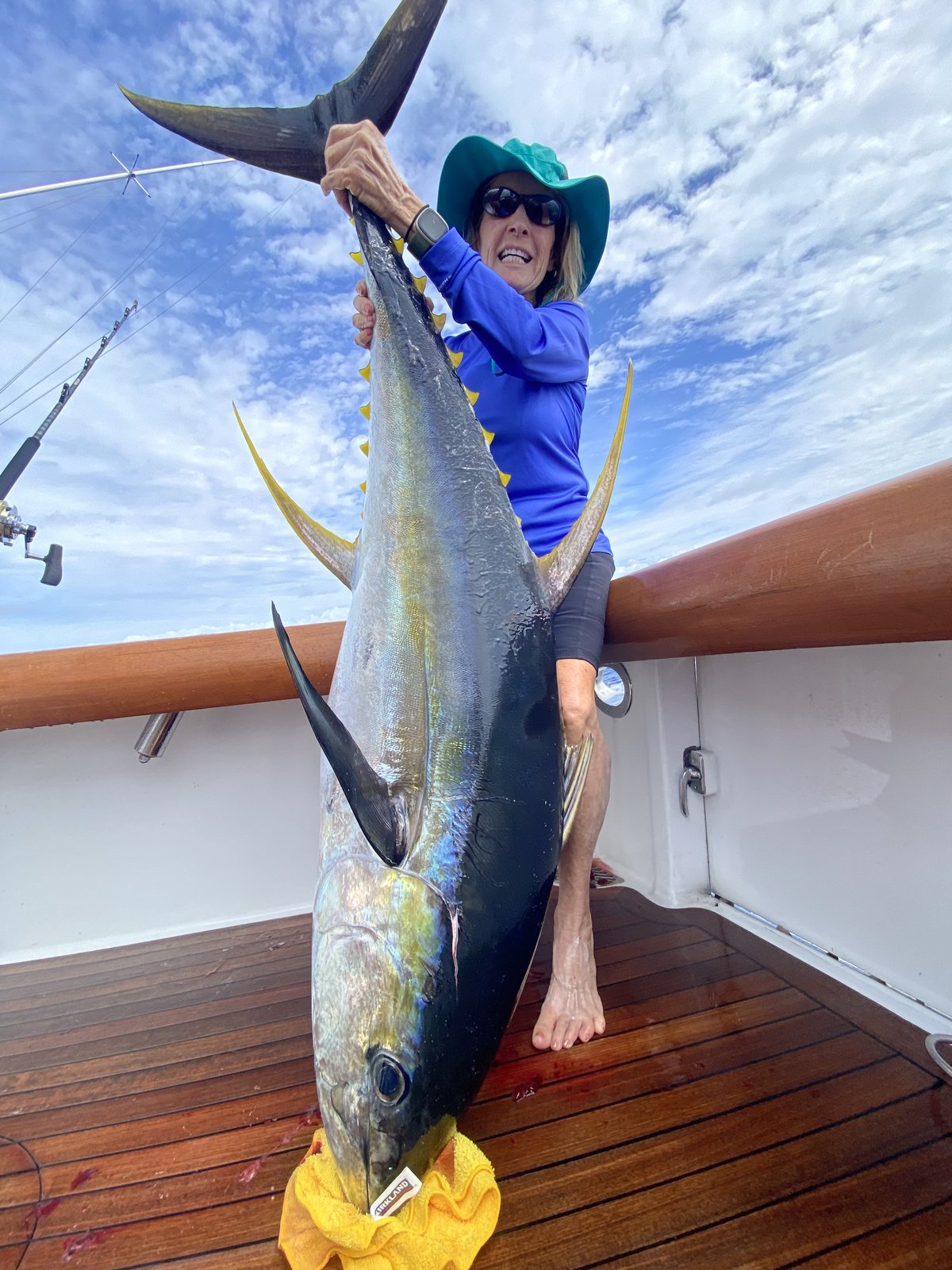
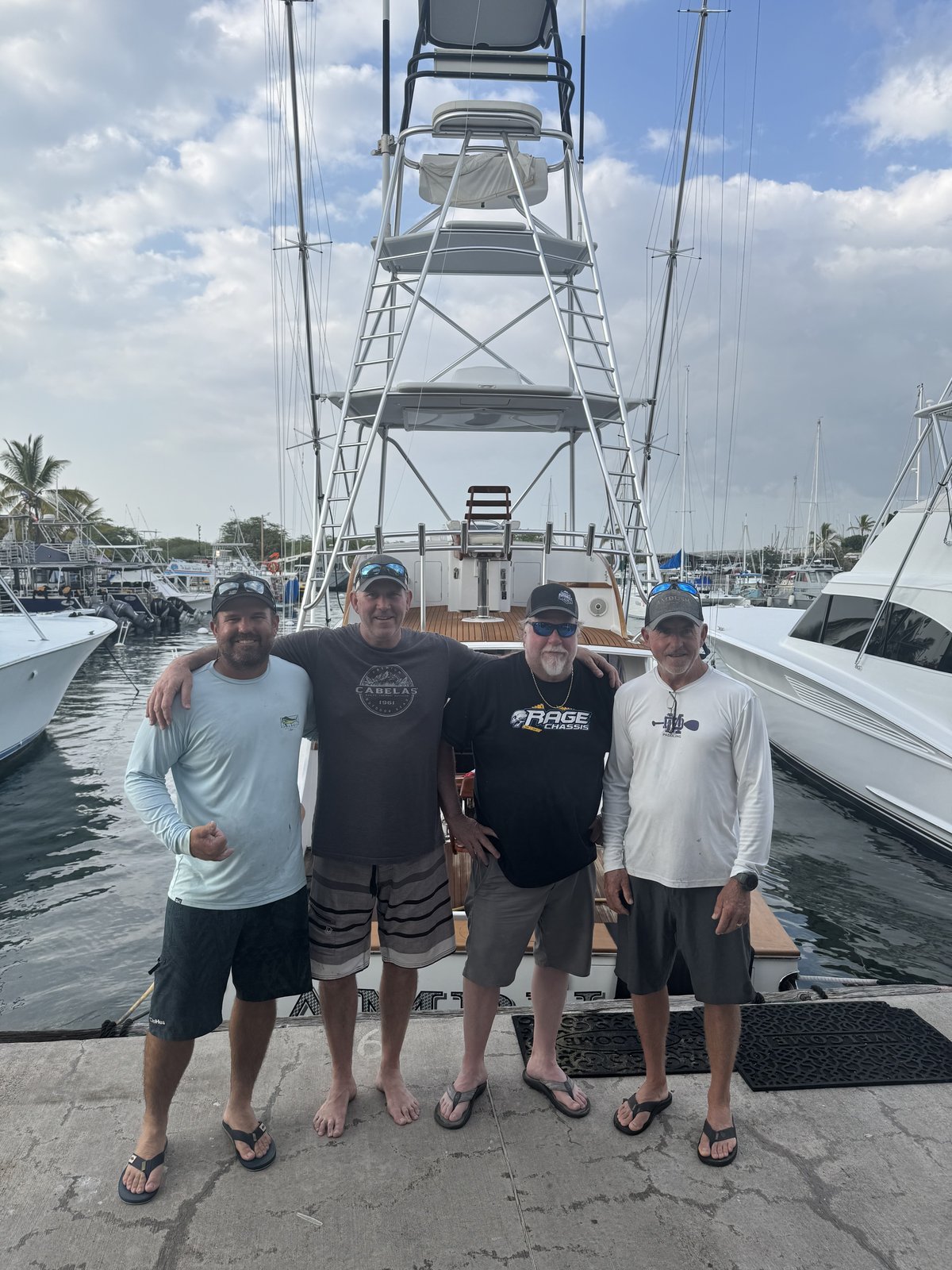
A few we've put in the boat lately. Drag, swipe, or scroll through.

Catch aboard Ambush off Kailua-Kona
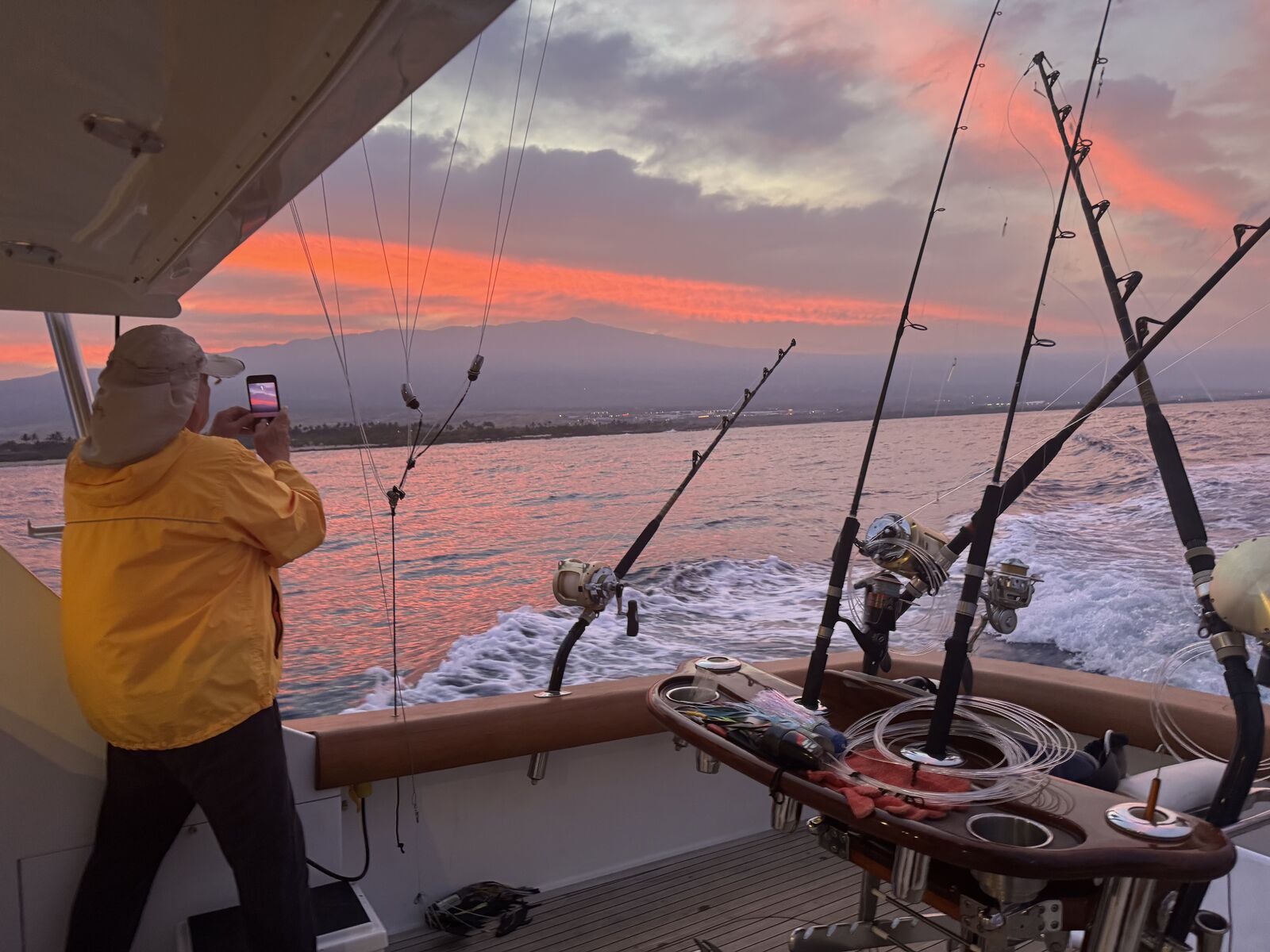
Aboard AmbushA day on the Kona coast.
Catch aboard Ambush off Kailua-Kona
Honokōhau HarborThe end of a nine-hour day.
Catch aboard Ambush off Kailua-Kona
Aboard AmbushOut where the drop-off lives.
Catch aboard Ambush off Kailua-Kona
Aboard AmbushCaptain Mark on the wire.
Catch aboard Ambush off Kailua-Kona
Aboard AmbushA grin worth the early call.
Catch aboard Ambush off Kailua-Kona
Aboard AmbushHooked up and tight.
Catch aboard Ambush off Kailua-Kona
Aboard AmbushFrom the Kona drop-off.
Catch aboard Ambush off Kailua-Kona
Aboard AmbushA summer-run blue.
Catch aboard Ambush off Kailua-Kona
Aboard AmbushAhi over the rail.
Catch aboard Ambush off Kailua-Kona
Aboard AmbushThe reason you came.
Catch aboard Ambush off Kailua-Kona
Aboard AmbushBringing one home.
Catch aboard Ambush off Kailua-Kona
Aboard AmbushMahi gold over the deck.
Captain Mark Bartell, Ambush Sportfishing

We run nine hours because that's how long it takes to fish Kona right — work the drop-off, find the porpoise pods, switch to live bait when the bite tells us to. The fish don't care about your watch. You just have to go fish.

How We Fish

The techniques on Ambush.

Three approaches cover almost everything we do on the water. Captain Mark calls the play based on the conditions, the bite report, and what's showing on the sonar.

The Spread

Trolling skirted lures

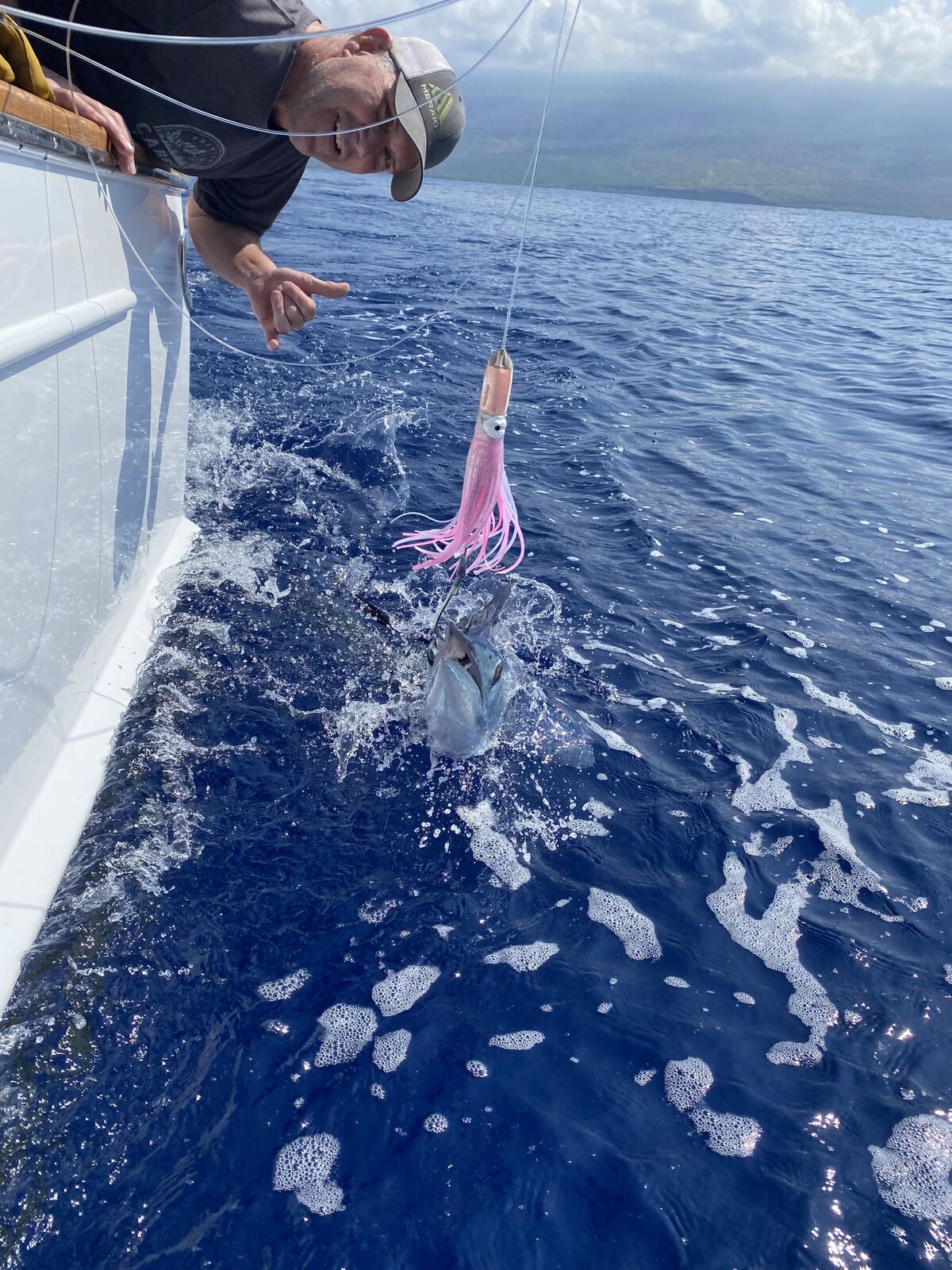
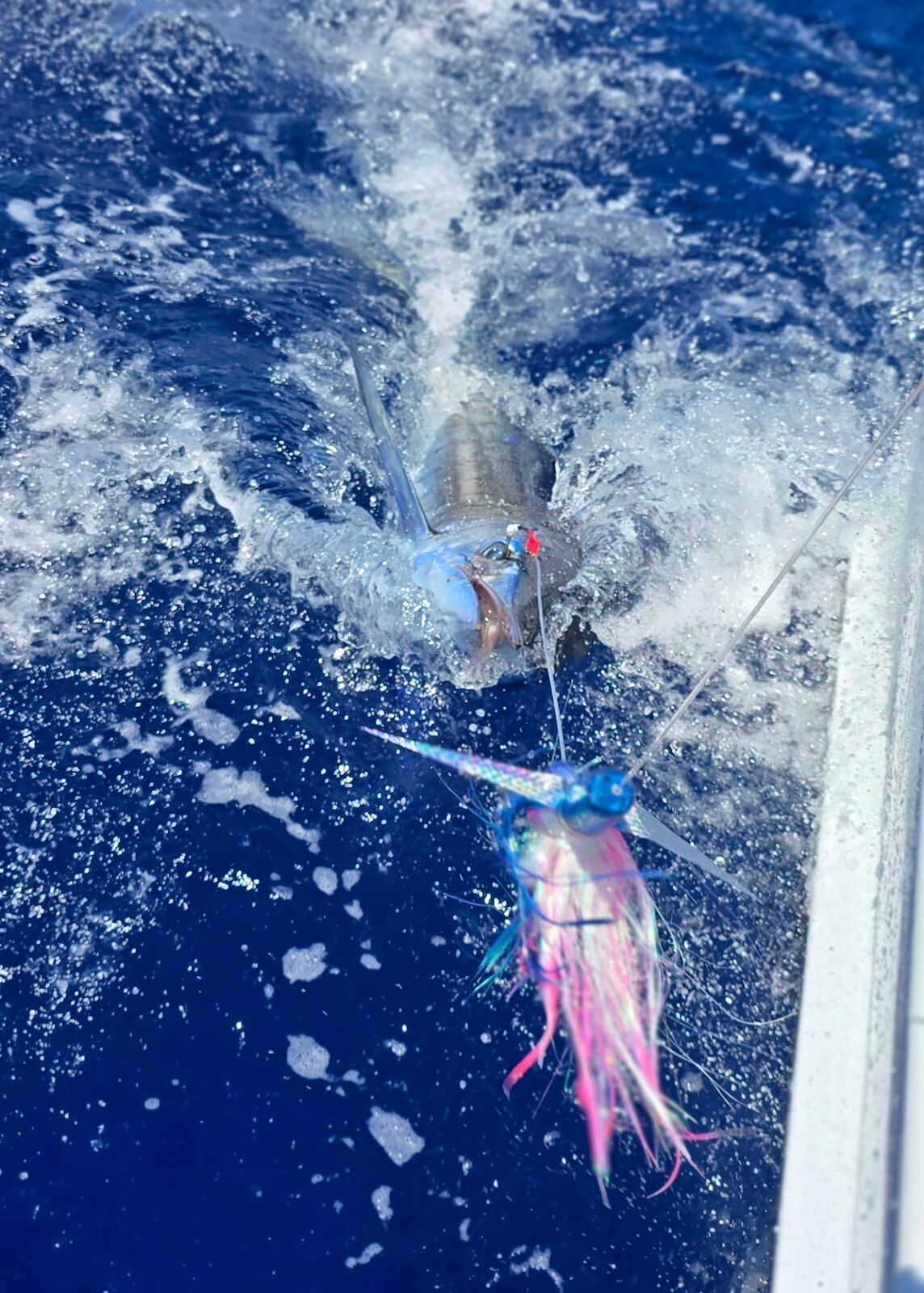
The dominant Kona technique. We tow a 5- to 7-lure spread at 8–10 knots — Marlin Magic, Black Bart, Moldcraft heads — staggered across the wake and outriggers. Each lure works a different position in the spread. When a marlin lights up behind the long rigger, the captain reads the body language and decides whether to drop back, switch, or let it eat.

Live Bait

Bridging an aku

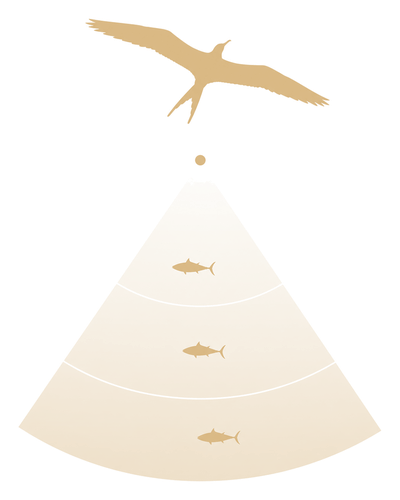
When porpoises and frigate birds show up, the big ahi and marlin are usually under them. We catch a live aku, bridle it, and drop it back into the spread. It swims, it kicks, and a 600-pound blue will eat it without thinking. This is how the biggest fish of the season come over the rail.

Reading the Water

Sonar & sky

Ambush carries Furuno Omni 360° sonar — the captain can see schools of bait, current edges, and tuna stacks for hundreds of meters around the boat. Combined with reading bird activity, weed lines, and color changes, it's how we find fish on a slow day. Most of fishing isn't fighting — it's finding.

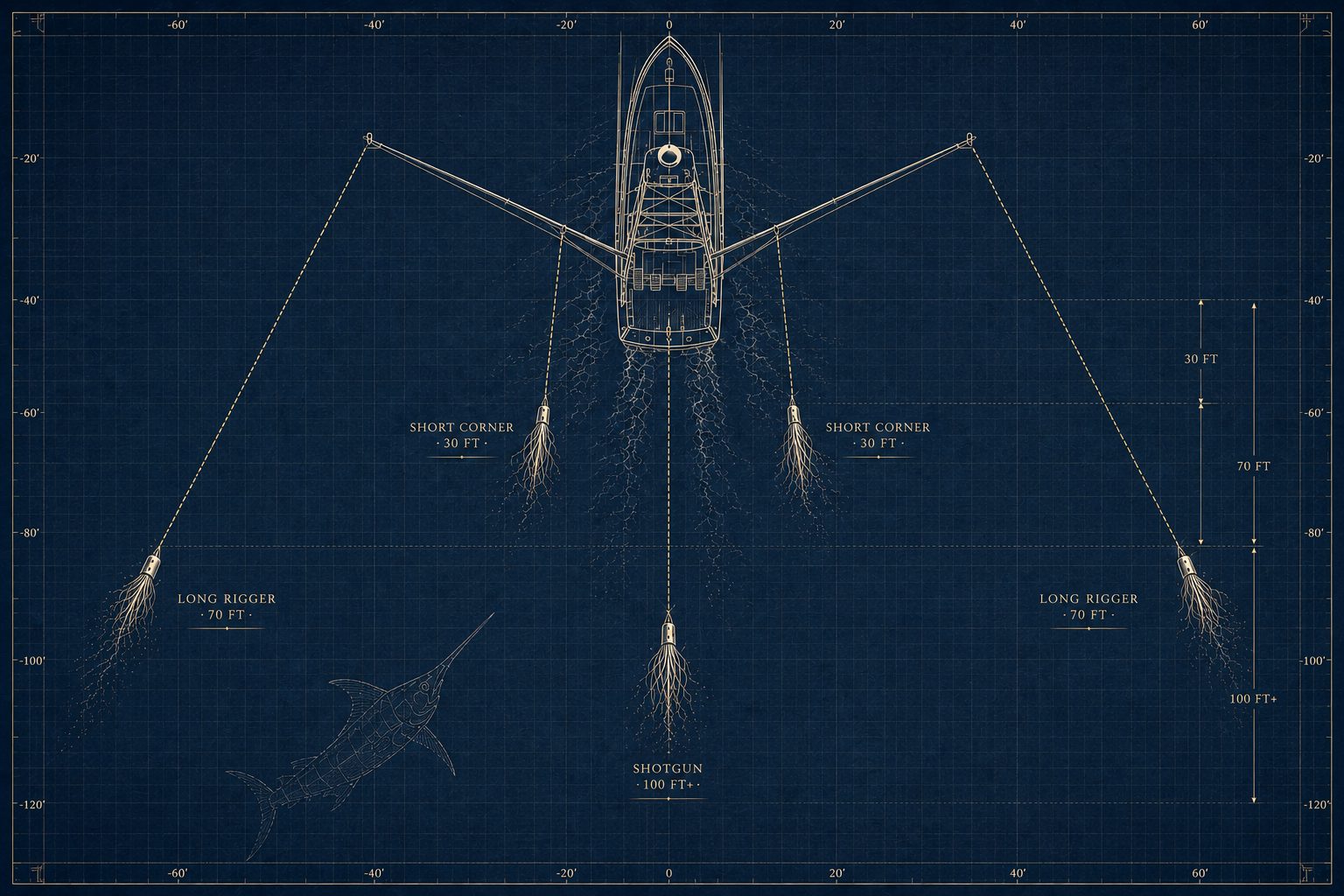
The Spread, Illustrated

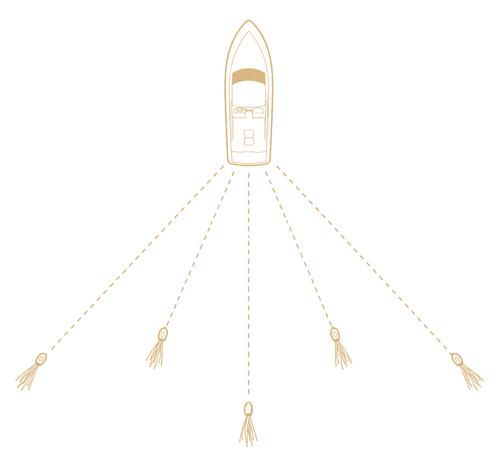
Five lures, five jobs.

Each lure works a different position behind the boat — different distance, different lure head, different speed in the wake. When a fish comes up, the captain reads the body language and decides which line to feed.

Short corner — the closest lure, riding the white-water wash where blue marlin come to eat. Long rigger — out 70 ft, the lure where most strikes happen. Shotgun — way back, dead center, the cleanup man.
Reserve the Boat

Ready to fish?

Call Captain Mark. He'll give you the bite report, confirm your date, and set the day.

Reserve by phone (808) 366-4808
← Back to Ambush Sportfishing